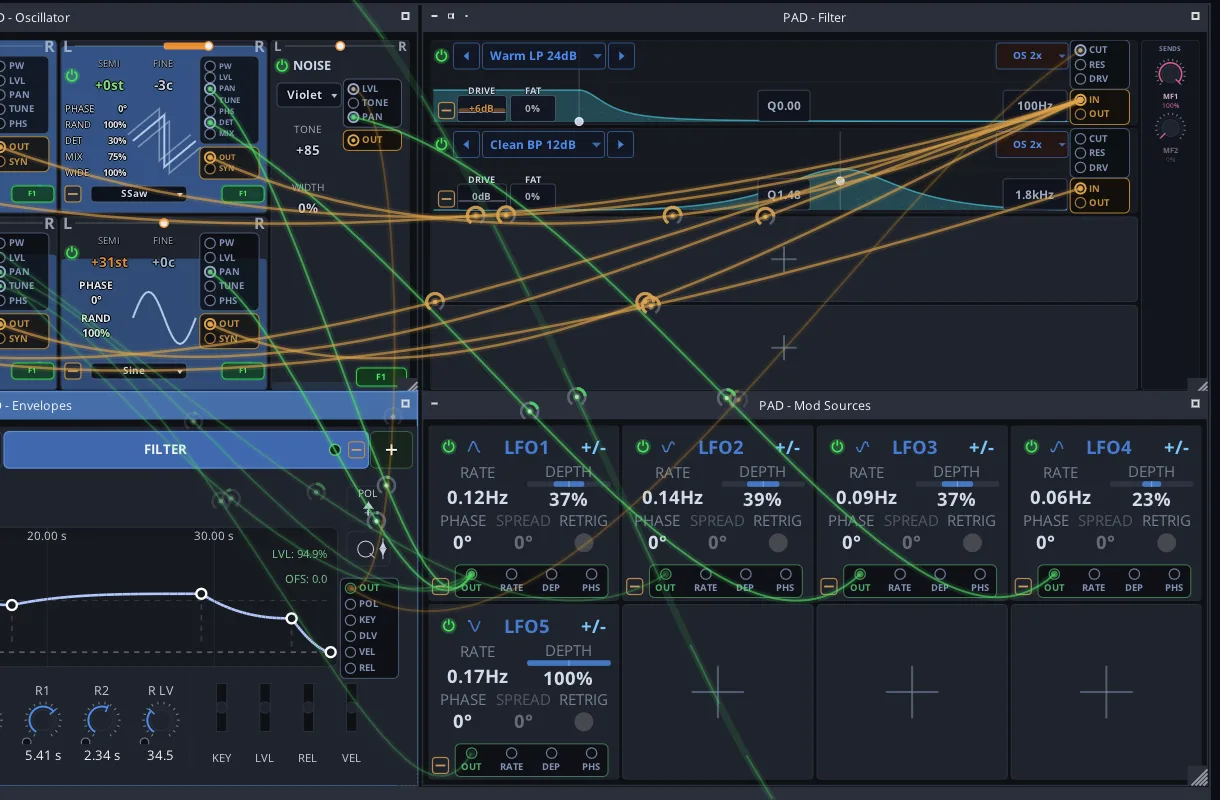
Oscillato patch view with the PBS-80 preset: cables run from the oscillators into two filters

Oscillato

A massive poly-polysynth inspired by vintage and legendary synths, then taken further.

I built Oscillato by myself, for myself, over ten years, because I needed a synth that sounded as good as my analog polysynths, and even better.

Every layer is its own polysynth, and you can keep stacking them, until you have thousands of Oscillators.

Add more Layers, Oscillators, Envelopes, etc, as you need them by clicking +

$150.00 $75.00

Early Access price

  • Early Access
  • macOS 10.14 or later: app, AU, AUv3, VST3
  • Windows 10 or 11 (64-bit): VST3, app

See and hear it (no processing or effects)

Four layers, each with many oscillators. Turning the Dessert macro raises the level of three of them, bringing in perfect fifth harmonics.

How a patch is built

  • Oscillato layer tabs on the PBS-80 preset: Pad and Sample Hold

    Stack layers

    Click + to add a layer.

    • Each layer is its own synth, with its own oscillators, envelopes, filters and mod sources.
    • Stack All, Round Robin and 12 more routing modes decide which layers play each note.
    • Adjustable key zones per layer.
  • Patch cables running from the PBS-80 oscillators and LFOs into two filters

    Patch with cables

    Drag a cable from almost any jack to almost any other, and see where every mod source goes.

    • A bead on each mod cable sets its amount, curve and polarity.
    • Cable a mod source into a bead, so one modulation controls another.
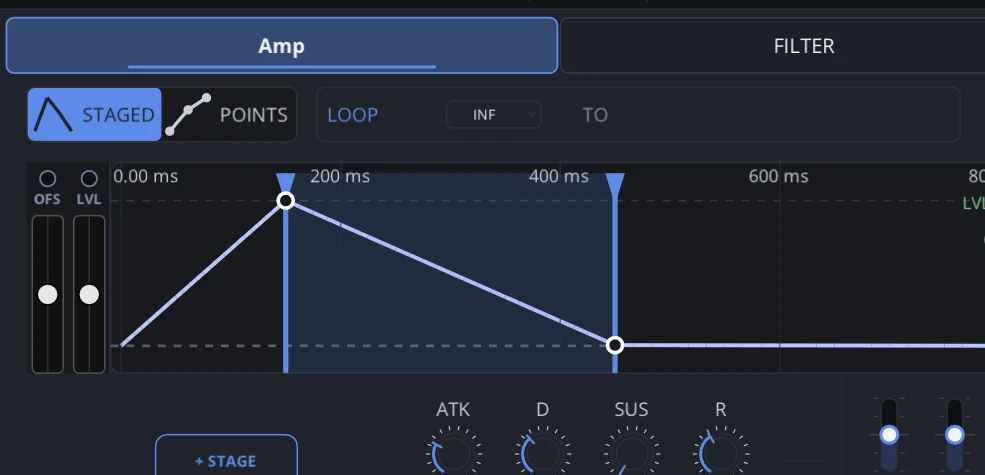
  • Filter envelope in the staged editor with delay, attack, two decays, sustain and two releases

    Envelopes, plural

    Click + for a new envelope and cable it to whatever you want to move. I was always frustrated that hardware and software synths ran out of envelopes. Modulate your modulations.

    • 7 stages: delay, attack, two decays, sustain, two releases.
    • Or click to add points, with as many stages as you wan

A closer look

Waves, wavetable and FM

Click + to add an oscillator to a layer and pick its type.

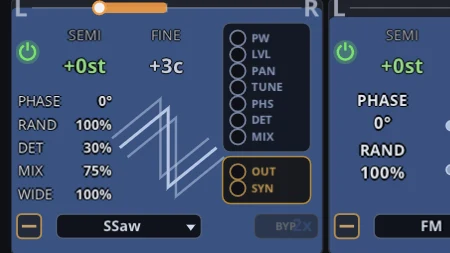
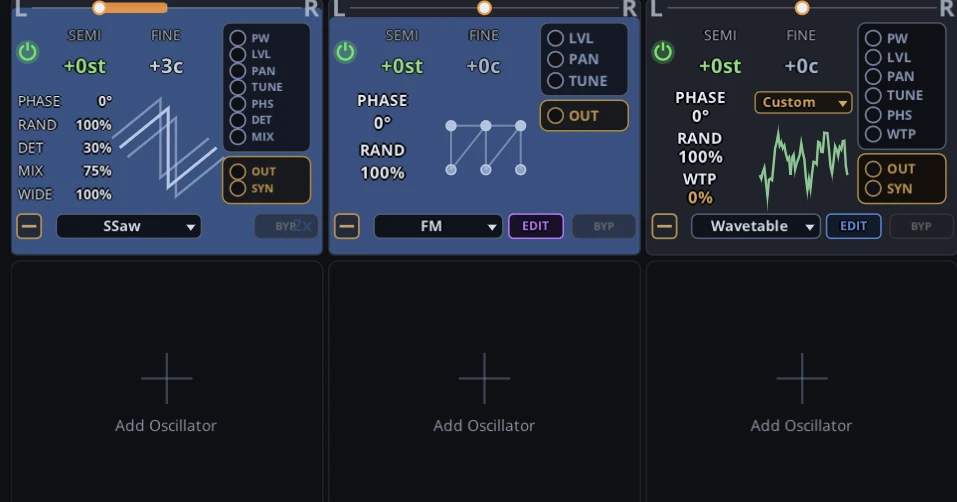
  • Oscillato oscillators on the PBS-80 preset: SuperSaw, sine and saw waves beside a violet noise source

    Waves

    Saw, square, triangle, sine, PWM, saw down and two SuperSaw implementations.

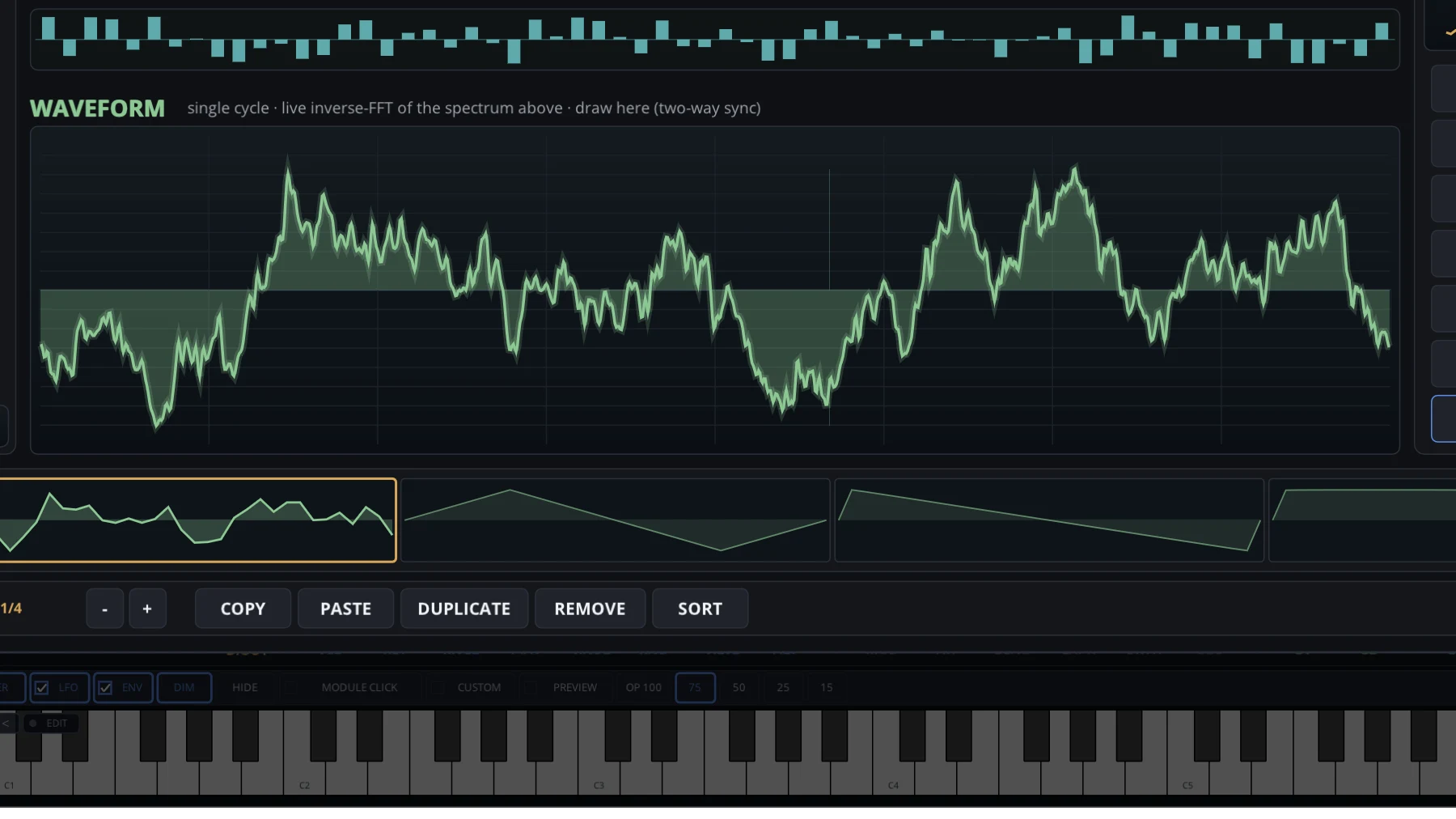
  • Wavetable

    Band-limited wavetables that stay clean as you play higher.

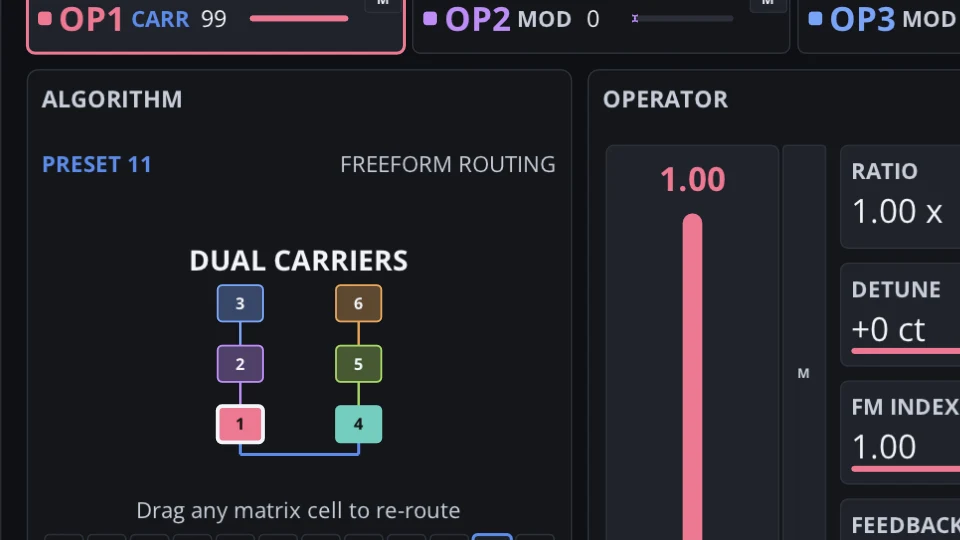
  • FM

    Every FM oscillator is its own six-operator, DX7-style FM synth.

Mix types in the same layer, like an FM bell over a warm saw.

My SuperSaw in Oscillato runs in true stereo, and it is my favorite oscillator. I own an original Roland JP-8000, where the SuperSaw came from, and I have not heard another SuperSaw with this much width, power and sound, the JP-8000 included.

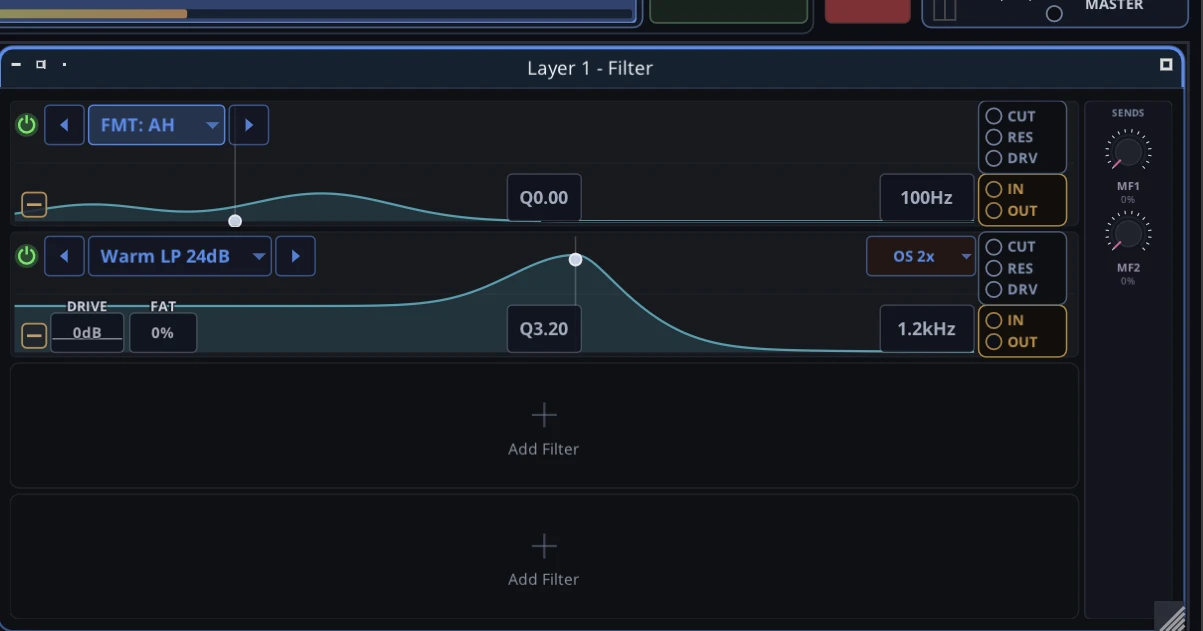
Warm LP 24dB and Clean BP 12dB filters on the PBS-80 preset, with patch cables

Filters for every sound

Click + to add a filter to a layer and pick its sound.

  • Warm ladder filters give pads and basses a vintage roundness.
  • Clean filters keep a sound precise.
  • The 303 filter snaps and squelches for acid lines.
  • Vowel filters make a sound talk.
  • Oversample each filter 2x to 8x to keep high resonance smooth.

Every filter runs in true stereo, so the left and right channels each get their own filter. That took a lot of work to optimize, and it is a big part of why Oscillato sounds like no other synth.

Envelopes that loop

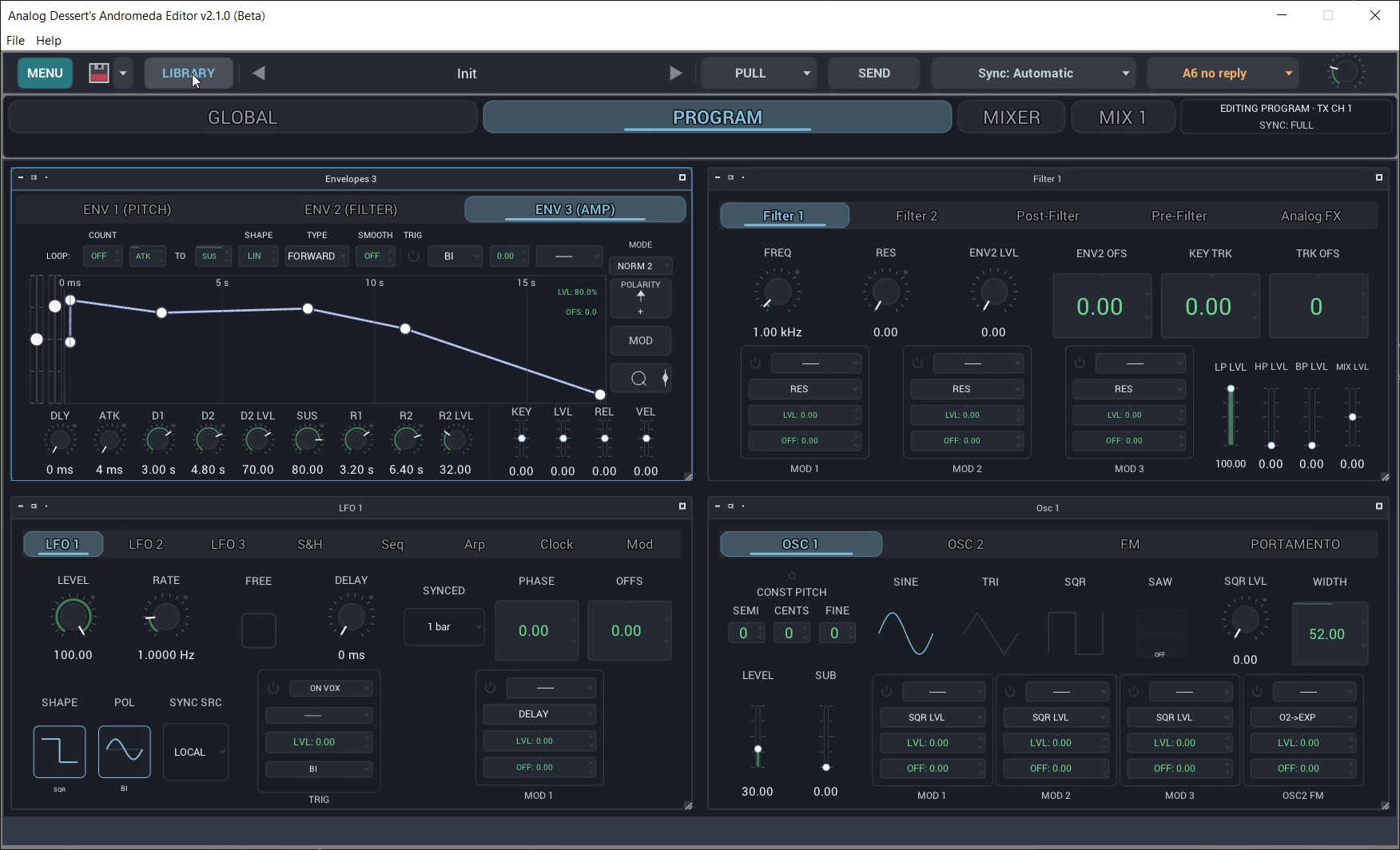
Set an envelope to loop its stages, the way an Andromeda A6 does.

  • Loop forward, reverse, ping-pong or one-shot.
  • A held pad pulses or breathes without an LFO.
  • Each stage has its own curve from 9 shapes, so a swell can rise slowly and fall away fast.

Note routing

Pick a routing mode to decide which layers each note reaches.

  • Round Robin can change the sound on every step of an arpeggio.
  • Random picks the layer for you.
  • Chord-stable routing sends the lowest note of a chord to layer 1 and the next to layer 2, even when the notes arrive milliseconds apart.
  • Oscillato also responds to MPE.

First API programmable synth

Oscillato has a built-in MCP server with 100+ tools, plus an API for scripting it directly. As far as I know, it's the first synth plugin with its own MCP server.

Ask an assistant such as Claude, Codex or ChatGPT in plain language for "a slow, dark, warm pad out of Blade Runner" and it can:

  • Add layers and set parameters while you watch the patch change.
  • Wire cables between the parts it adds.
  • Explain how an unfamiliar patch is wired.
  • Undo anything it changed.

I do not like or support AI-generated music, and I have no interest in making it.

What interests me is helping you build the patch of your dreams. Describe the sound in your head, in your own words, and have it come to life quickly and easily. Ask for a whole patch from scratch, or for a tweak to one you already have.

I know of no other synthesizer that can do this.

One more envelope

I have spent 20 years in a studio full of analog synthesizers, working out what makes them sound the way they do.

More than a decade ago, I started building a software synth to replace my 16-voice analog polysynths, like the Andromeda A6, without losing their sound. Now most of that hardware sits unused, because Oscillato replaced it.

Andromeda A6 depth, Oberheim Eight Voice architecture, ARP 2600 patch cables.

The whole instrument comes from always wanting one more envelope.

Oscillato is in Early Access:

  • Some things can still change.
  • There is no full manual yet, so hover over a control for its tooltip.
  • Early Access buyers get free updates through every 1.x release.

Analog Dessert

Explore the instrument

Open a topic when you want the details. The rest stays out of the way.

Build a polysynth from parts

Most synths give you one fixed voice. Oscillato gives you parts.

A layer is a synth of its own. Click + to add an oscillator, a filter, an envelope or an LFO, then drag cables between them.

  • Need another envelope? Click +.
  • Need a modulator for one corner of the patch? Add it and cable it in.
  • Right-click a layer to copy, duplicate or initialize it.
  • Every layer has its own volume, pan and tuning.

When a stack needs one shared filter, send layers to the master section. It holds up to four master filters, plus its own envelopes and modulation.

Seven-stage envelopes

Oscillato’s envelopes have seven stages: delay, attack, two decays, sustain and two releases. I took the idea from the Alesis Andromeda A6, and I have not seen it in other soft synths.

Two decays and two releases let a sound swell, fall back and swell again, which suits pads.

  • Use the delay stage to bring part of a sound in after the note starts.
  • Give the filter one envelope, pitch another and pan a third, or give every oscillator its own.
  • Switch to Points mode for a free-form envelope: click the line to add a point, and keep adding as many points as you want.
  • Drag any point to reshape the curve, and loop part of the envelope when you want it to keep moving.
A stack of synths on one note

Every note can become its own synthesizer.

Each layer can hold a completely different sound: a sub bass, a noisy attack, a detuned pad, a shimmer that only plays on high notes.

The router decides where your notes go. A note can reach:

  • One layer, or every layer at once.
  • The next layer in a round robin.
  • A random layer.
  • A key zone or a velocity zone.
  • A layer set by the note’s place in a chord: lowest note to layer 1, next to layer 2, even when the notes arrive milliseconds apart.

There are 14 routing modes, built on the same routing code as Pieplate, my plugin that turns several hardware or software synths into one polysynth.

Oscillators and tuning

Each oscillator plays classic waves, SuperSaw, wavetable or FM, and a single layer can mix types.

  • An FM oscillator is a full six-operator, DX7-style FM synth.
  • The SuperSaw stacks 7 detuned saws in one oscillator.
  • On the Global page, load a Scala file to play microtonal scales across every layer.

Give a layer 6 SuperSaws and one note plays 42 saws. Stack all 16 layers on that note and it plays 672. Hold a three-note chord and that is 2,016 saws at once. Is that excessive? Yes.

Specs and requirements

At a glance
Layers
each layer is its own synth; click + to add another
Oscillators
classic waves, SuperSaw, wavetable and six-operator FM, mixed in any layer
Filters
warm ladder, clean, 303 and vowel filters; 2x to 8x oversampling; true stereo
Envelopes
click + whenever you want another; 7 stages, 9 curve shapes, looping, or create your own envelope points
Modulation
LFOs and sample-and-hold per layer and global; amount, curve and polarity on each cable; a mod matrix lists every route
Master section
master filters, envelopes and modulation sources
Note routing
Stack All, Round Robin and more; MPE; MIDI in and out
Tuning
microtonal scales from Scala files
Control
built-in MCP server (100+ tools) and an API
VST3 outputs
8 stereo pairs
Undo
full undo and redo
Requirements

macOS 10.14 or later

  • Standalone app, AU, AUv3 and VST3
  • Intel (x86_64) build; runs on Apple Silicon through Rosetta 2

Windows 10 or 11 (64-bit)

  • VST3 and standalone app
Links

Questions

What is MCP?

MCP (Model Context Protocol) is an open standard that lets an AI assistant use tools inside another app. Oscillato has a built-in MCP server, so an assistant such as Claude or Codex can connect to it and work on your patch while you watch.

Ask in plain language, for example:

  • "Make me a pad like something out of Blade Runner."
  • "Add a layer an octave up with a slow filter sweep."
  • "Make this bass punchier."

The assistant uses 100+ tools to add layers, set parameters and connect cables. Keep tweaking by hand at any point, or undo its edits.

Which synths have MCP support?

As far as I know, Oscillato is the first synth plugin with its own MCP server. I have not found another synthesizer with a built-in MCP server.

What do Early Access buyers get?

You get the full instrument at the Early Access price, with every feature included, and free updates through all 1.x releases. Some things may still change during Early Access: preset compatibility, formats, features and the price.

Does it run on Apple Silicon?

Yes, through Rosetta 2. The macOS build is Intel (x86_64) only, so an Apple Silicon Mac translates it when it launches. It needs macOS 10.14 or later.

How does activation work?

After checkout, your license key appears on the receipt and arrives by email. Open Oscillato, paste the key when it asks, and click Activate. One key activates Oscillato on up to 2 computers, and the license does not expire. If you lose the installer, download it again from the re-download page with your key or email address.

Is there an official Oberheim Eight Voice, Voyetra 8 or Andromeda A6 plugin?

Not that I know of, and Oscillato does not emulate any of them. It borrows the idea that made them special: every voice can be its own synth, with its own oscillators, filters and envelopes.

Does Oscillato have built-in effects?

No. Processing ends at the filters, so add reverb, delay and other effects in your DAW. The VST3 version has 8 stereo output pairs.

Pricing

Oscillato

Early Access

$150.00 $75.00

Every feature in one license. No subscription.